
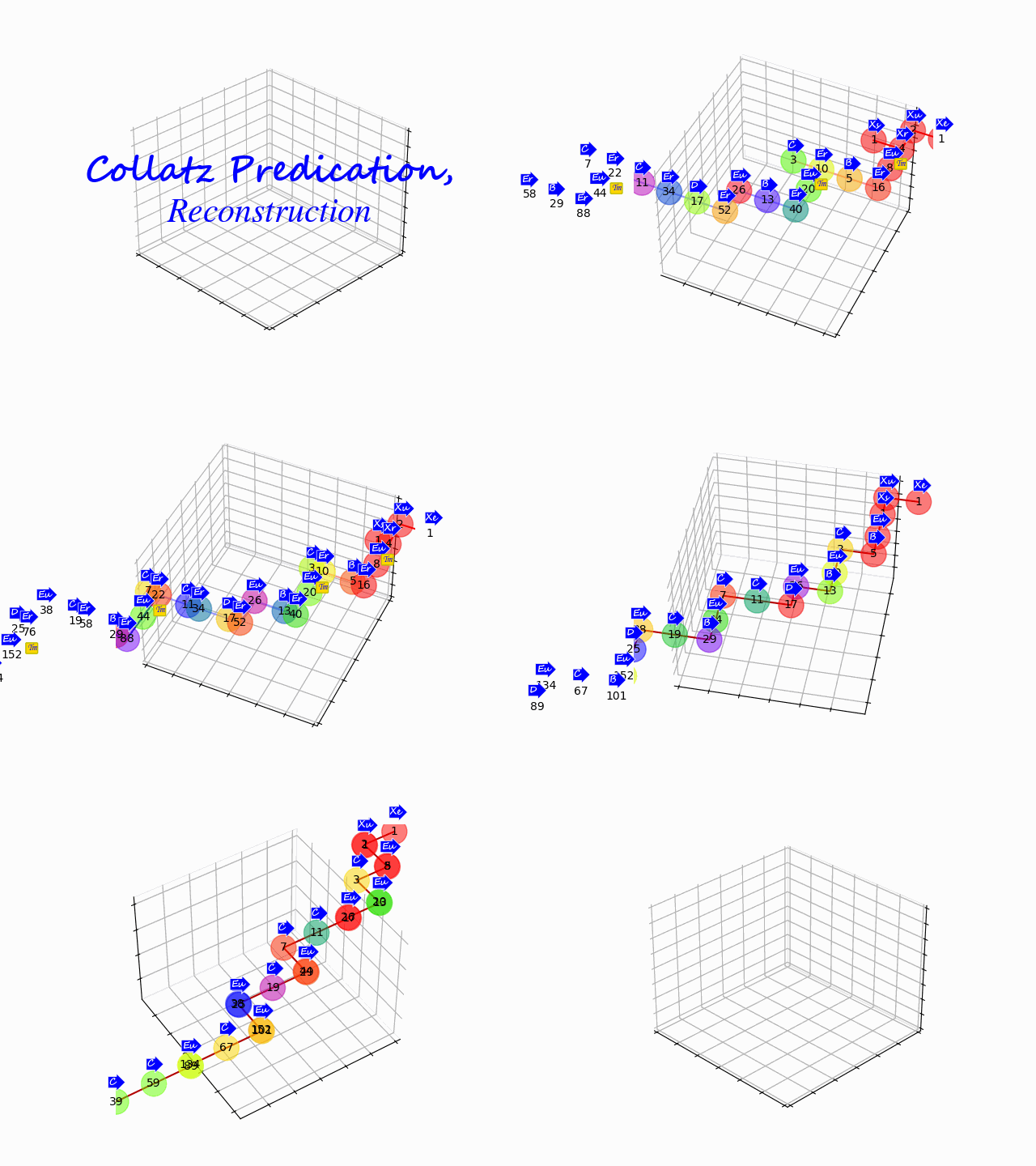
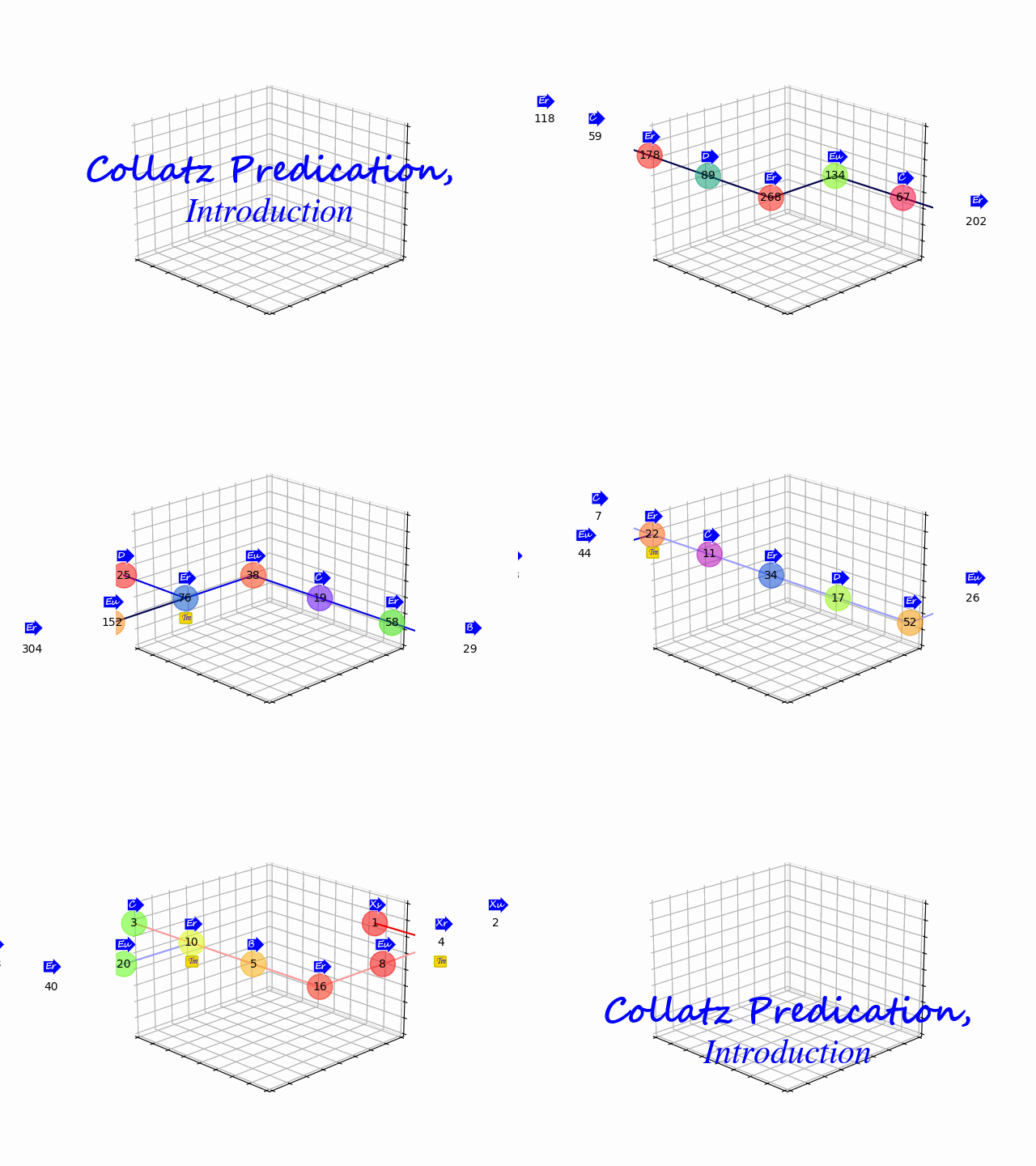
コラッツ問題 JIGENDHOの回答 3Dプログラミング with Python
Pythonを始めた;2023年11月2日
Python , Jupyter, Numpey, Pandas, Scipy, Matplotlib,
・・・訳も分からずインストールする一週間
わけあって無料のPyton e-Learning、数講座受けた二週間
class, for文, while文, if文, List, Matplotlib,・・・部品を試した一週間
JIGENDHOの回答、3Dプログラミングの一週間
めでたく完成;2023年12月6日
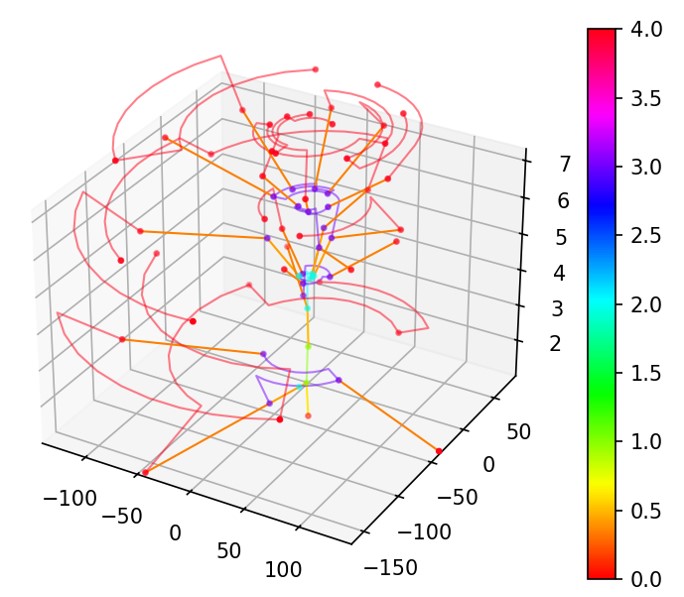
scriptを掲載する
よかったら自分のPCで試してほしい
※JIGENDHOの回答のアドレスをscript中に記載した、参照されたし
※掲載の記事に[]が反映されない部分がある
  Cell In[5], line 428
    CCLD=
         ^
SyntaxError: invalid syntax
このような場合CCLD=[](半角)としてほしい
ここでは反映の都合上全角で記載
# Collatz prediction
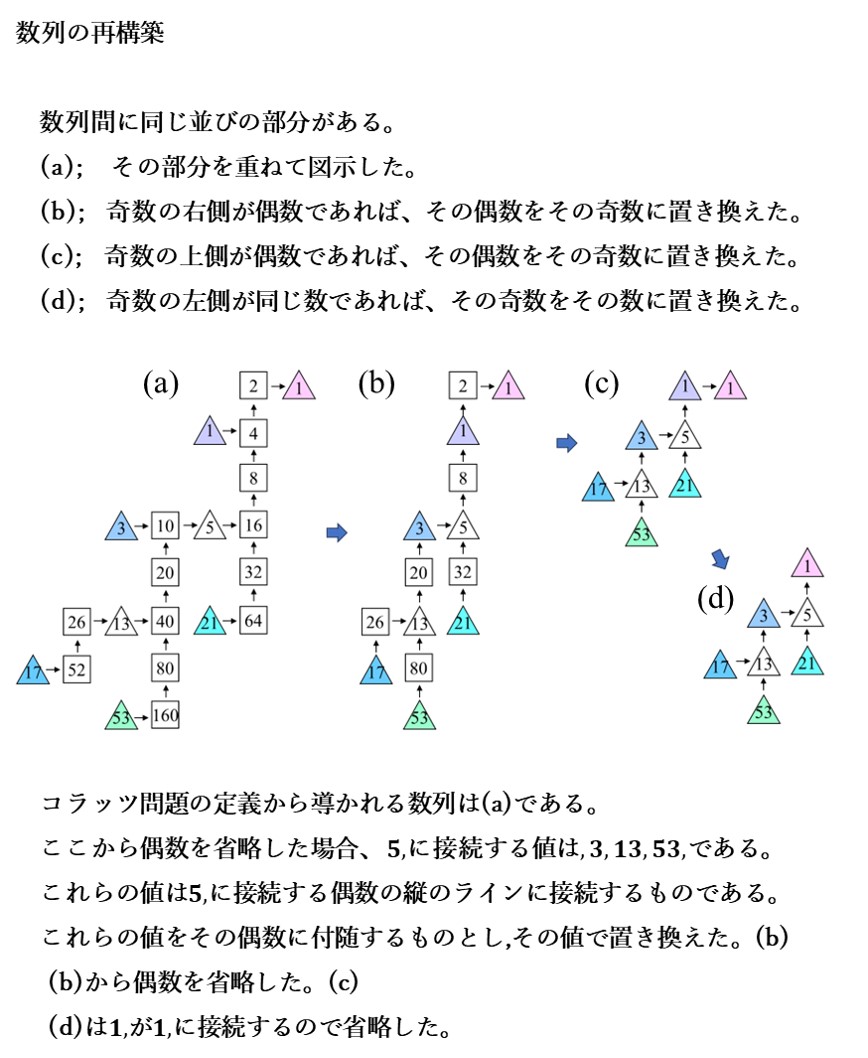
# コラッツ問題Jigendho回答のコラッツ構造体を3D化する
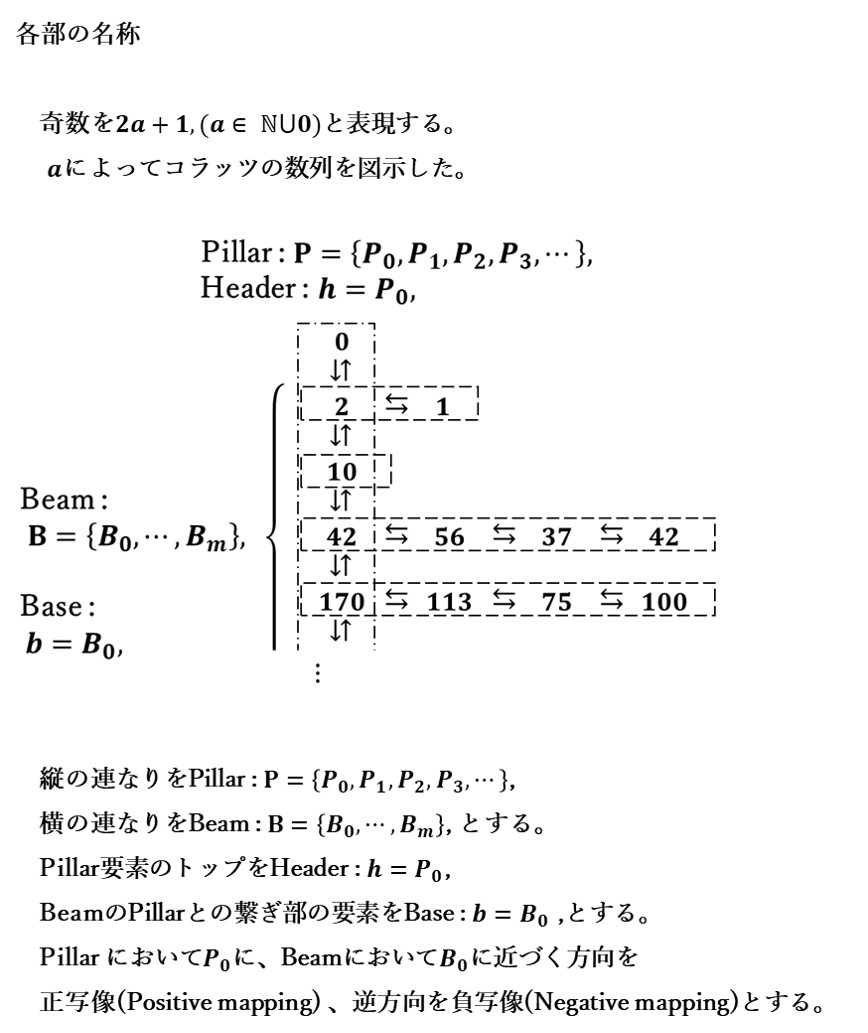
# その構造体はPillarとBeamで構成される
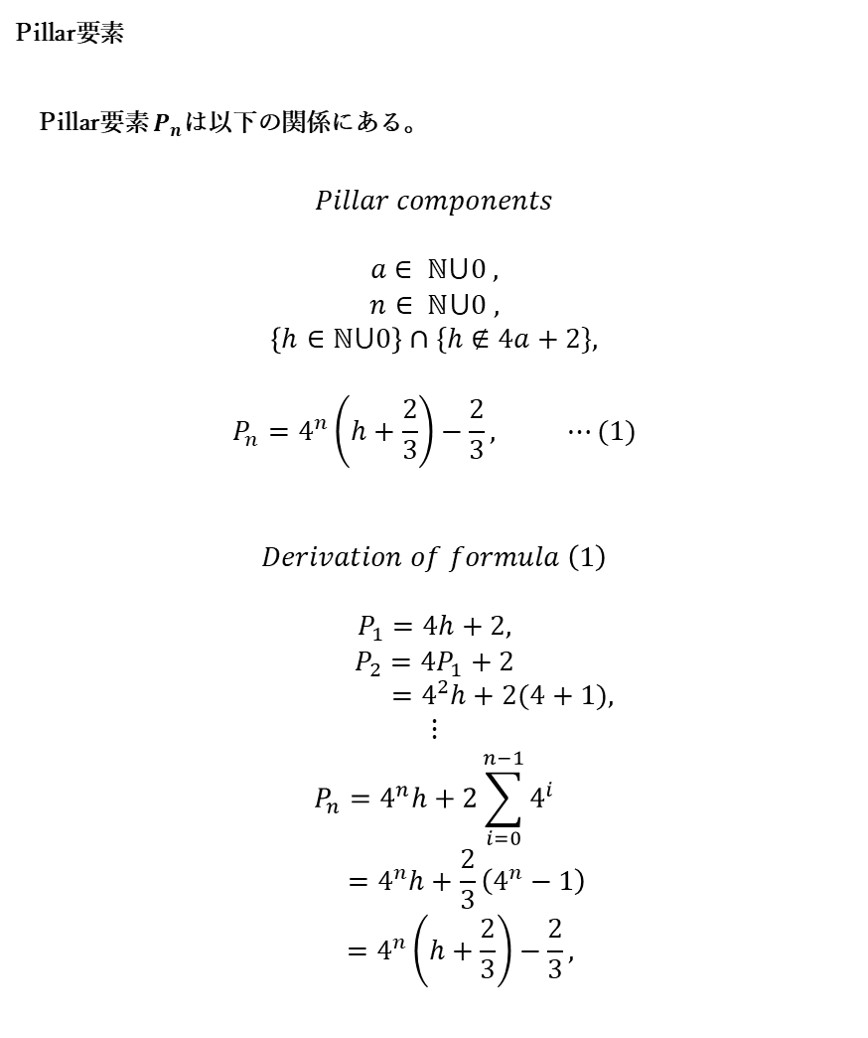
# PillarはHeaderおよびそれにつづく要素によって形成される
# その要素に4を乗算して 2を加算し次の要素が展開する
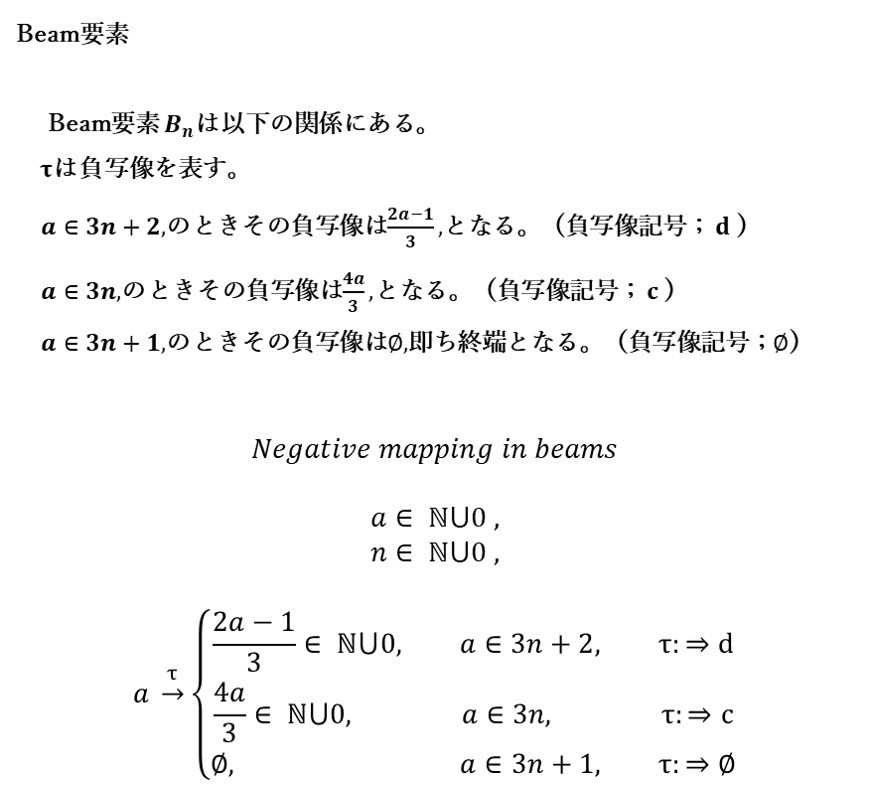
# BeamはHeaderを除くPillarの各要素から展開する
# その要素を3で割ったあまりによって3つの展開パターンをとる
# 余りが0のときの次の要素はこの要素を3で割って4倍する
# 余りが1のときは次の要素に展開しない
# 余りが2のときの次の要素はこの要素を2倍して1を引き3で割る
# 各要素は円柱座標系にプロットされる
# 高さは次の2つの条件で1上昇する
# Headerから次の要素に展開するとき
# Pillar要素からBeam要素に展開するとき
# 偏角はその要素の対数の大きさによって与えられる
# 距離はその要素の大きさによって与えられる
# https://jigendho.hatenablog.com/entry/2023/10/10/184313?_gl=1*gf1x80*_gcl_au*MTE1MDA4NjI2NS4xNjk5NTI2OTU1
# Parameters
ElapsedTimes=4 # Elapsed Times
# Pillar展開、Beam展開を1経過とする
# パラメータは展開数を表す
DCM='hsv' # Data Color map
# 各要素のカラーマップを表す
PCM='Wistia' # Pillar Color map
# Pillar展開のカラーマップを表す
BCM='hsv' # Beam Color map
# Beam展開のカラーマップを表す
# それぞれ指標はElapsedTimesとする
# Color map;
# 'Wistia',
# 'seismic',
# 'YlGn',
# 'hsv',
# 'PuRd'
# Import Packages
import numpy as np
from fractions import Fraction
import pprint as ppr
import matplotlib.pyplot as plt
# ----Generate mapping for each pillar and beam------------------------
# pillar及びbeamを展開するクラス
# インスタンス化するクラスとそれを継承したクラス群で構成されている
# 引数は元要素、元高さ、元展開
# 戻り値は次の要素、次の高さ、次の展開、展開記号
# https://jigendho.hatenablog.com/entry/2023/10/10/184313?_gl=1*gf1x80*_gcl_au*MTE1MDA4NjI2NS4xNjk5NTI2OTU1
# Class; Mapping
# Version; V03.3
# Methods; Beam, BeamOrg, BeamCr, BeamStp, BeamStO, BeamAll,
# Pillar, PillarOrg, PillarCr, PillarStp, PillarStO, PillarAll
# Class Mapping
class Mapping:
def __init__(self, anm1, StepV, Prgrss):
self.anm1 = anm1
self.StepV = StepV
self.Prgrss = Prgrss
def mapping(self):
pass
# Method Beam
class Beam(Mapping):
def mapping(self):
if self.anm1 % 3==0:
return int(Fraction(4*self.anm1,3))
elif self.anm1 % 3==2:
return int(Fraction(2*self.anm1-1,3))
else:
pass
# Method BeamOrg
class BeamOrg(Mapping):
def mapping(self):
if self.anm1 % 3==0:
return int(self.anm1)
elif self.anm1 % 3==2:
return int(self.anm1)
else:
pass
# Method BeamCr
class BeamCr(Mapping):
def mapping(self):
if self.anm1 % 3==0:
return "c"
elif self.anm1 % 3==2:
return "d"
else:
pass
# Method BeamStp
class BeamStp(Mapping):
def mapping(self):
if self.anm1 % 3==1:
pass
else:
if self.anm1 % 4==2:
return int(self.StepV+1)
else:
return int(self.StepV)
# Method BeamStO
class BeamStO(Mapping):
def mapping(self):
if self.anm1 % 3==1:
pass
else:
return int(self.StepV)
# Method BeamAll
class BeamAll(Mapping):
def mapping(self):
if self.anm1 % 3==0:
if self.anm1 % 4==2:
return ([int(Fraction(4*self.anm1,3)),
self.anm1,
"c",
int(self.StepV+1),
int(self.StepV),
self.Prgrss+1]
)
else:
return ([int(Fraction(4*self.anm1,3)),
self.anm1,
"c",
int(self.StepV),
int(self.StepV),
self.Prgrss+1]
)
elif self.anm1 % 3==2:
if self.anm1 % 4==2:
return ([int(Fraction(2*self.anm1-1,3)),
self.anm1,
"d",
int(self.StepV+1),
int(self.StepV),
self.Prgrss+1]
)
else:
return ([int(Fraction(2*self.anm1-1,3)),
self.anm1,
"d",
int(self.StepV),
int(self.StepV),
self.Prgrss+1]
)
else:
pass
# Method Pillar
class Pillar(Mapping):
def mapping(self):
return 4*self.anm1+2
# Method PillarOrg
class PillarOrg(Mapping):
def mapping(self):
return int(self.anm1)
# Method PillarCr
class PillarCr(Mapping):
def mapping(self):
return "b"
# Method PillarStp
class PillarStp(Mapping):
def mapping(self):
if self.anm1 % 4==2:
return int(self.StepV)
else:
return int(self.StepV+1)
# Method PillarStO
class PillarStO(Mapping):
def mapping(self):
return int(self.StepV)
# Method PillarAll
class PillarAll(Mapping):
def mapping(self):
if self.anm1 % 4==2:
return ([4*self.anm1+2,self.anm1,
"b",
int(self.StepV), int(self.StepV),
self.Prgrss+1])
else:
return ([4*self.anm1+2,self.anm1,
"b",
int(self.StepV+1), int(self.StepV),
self.Prgrss+1])
# ----Polar coordinate representation of pillars and beams-------------
# 極座標系への変換クラス
# インスタンス化するクラスとそれを継承したクラス群で構成されている
# 各パラメータは配列である
# 引数は次の要素と元の要素、展開記号、各高さ、次の展開
# 戻り値は元の要素の極座標、次の要素の極座標
# https://jigendho.hatenablog.com/entry/2023/10/10/184313?_gl=1*gf1x80*_gcl_au*MTE1MDA4NjI2NS4xNjk5NTI2OTU1
# Class; CollCon2
# Version; V02.0
# Methods; EndValue,StartValue,"character",EndStep,StartStep,ProgressV
class CollCon2:
def __init__(self,
EndValue,
StartValue,
MapChar,
EndStep,
StartStep,
ProgressV
):
self.EV = EndValue
self.SV = StartValue
self.MC = MapChar
self.ES = EndStep
self.SS = StartStep
self.PV = ProgressV
def CollCon2(self):
pass
class EndPosi(CollCon2):
def CollCon2(self):
return ([[
self.EV*np.cos(2*np.pi*(np.log(self.EV+2/3)/np.log(4))),
self.EV*np.sin(2*np.pi*(np.log(self.EV+2/3)/np.log(4))),
self.ES,
self.PV,
]])
class StartPosi(CollCon2):
def CollCon2(self):
return ([
self.SV*np.cos(2*np.pi*(np.log(self.SV+2/3)/np.log(4))),
self.SV*np.sin(2*np.pi*(np.log(self.SV+2/3)/np.log(4))),
self.SS,
self.PV,
])
class AuxiliaryPosi(CollCon2):
def CollCon2(self):
ALPosi=
if self.MC != "b":
for AL in np.linspace(self.SV, self.EV, 10):
ALPosi.append([
self.EV*np.cos(2*np.pi*(np.log(AL+2/3)/np.log(4))),
self.EV*np.sin(2*np.pi*(np.log(AL+2/3)/np.log(4))),
self.ES,
self.PV,
])
return ALPosi
else:
pass
# ----Negative mapping data generation----------------------------------
# Class Mappingの戻り値から1経過分の要素データ配列を生成する
# https://jigendho.hatenablog.com/entry/2023/10/10/184313?_gl=1*gf1x80*_gcl_au*MTE1MDA4NjI2NS4xNjk5NTI2OTU1
# Collatz prediction
anNum=[0] # Natural number
anOrg=[0] # Original Natural number
anCr=[0] # Character
anStp=[0] # Step
anStO=[0] # Step Original
anAll=[[0,0," ",0,0,0]] # All data
anStIndx=0
anEnIndx=0
anIndCoun=0
for anPrg in range(ElapsedTimes):
for PrtCoun in range(anStIndx,anEnIndx+1):
# Pillar operation
anNum.append(Pillar(anNum[PrtCoun],
anStp[PrtCoun],
anPrg
).mapping())
anOrg.append(PillarOrg(anNum[PrtCoun],
anStp[PrtCoun],
anPrg
).mapping())
anCr.append(PillarCr(anNum[PrtCoun],
anStp[PrtCoun],
anPrg
).mapping())
anStp.append(PillarStp(anNum[PrtCoun],
anStp[PrtCoun],
anPrg
).mapping())
anStO.append(PillarStO(anNum[PrtCoun],
anStp[PrtCoun],
anPrg
).mapping())
anAll.append(PillarAll(anNum[PrtCoun],
anStp[PrtCoun],
anPrg
).mapping())
anIndCoun+=1
while anNum[anIndCoun] != None:
if (Beam(anNum[anIndCoun],
anStp[anIndCoun],
anPrg
).mapping() == None):
break
# Beam operation
anNum.append(Beam(anNum[anIndCoun],
anStp[anIndCoun],
anPrg
).mapping())
anOrg.append(BeamOrg(anNum[anIndCoun],
anStp[anIndCoun],
anPrg
).mapping())
anCr.append(BeamCr(anNum[anIndCoun],
anStp[anIndCoun],
anPrg
).mapping())
anStp.append(BeamStp(anNum[anIndCoun],
anStp[anIndCoun],
anPrg
).mapping())
anStO.append(BeamStO(anNum[anIndCoun],
anStp[anIndCoun],
anPrg
).mapping())
anAll.append(BeamAll(anNum[anIndCoun],
anStp[anIndCoun],
anPrg
).mapping())
anIndCoun+=1
if (anIndCoun ==100000):
print("b")
break
anStIndx=anEnIndx+1 # Next anStInd
anEnIndx=anIndCoun # Next anEnIndx
aVlue=anAll
# ----Psition Date-------------------------------------------------------
# 各要素の極座標データを配列にまとめる
# https://jigendho.hatenablog.com/entry/2023/10/10/184313?_gl=1*gf1x80*_gcl_au*MTE1MDA4NjI2NS4xNjk5NTI2OTU1
CCPD=
for i in range(1,len(aVlue)-1):
CCPD.extend(EndPosi(*aVlue[i]).CollCon2())
# ----Line Date----------------------------------------------------------
# 元要素と次の要素の繋がりの極座標データを経過単位で配列にまとめる
# https://jigendho.hatenablog.com/entry/2023/10/10/184313?_gl=1*gf1x80*_gcl_au*MTE1MDA4NjI2NS4xNjk5NTI2OTU1
CCLD=
for i in range(1,len(aVlue)-1):
CCLD=[StartPosi(*aVlue[i]).CollCon2()]
if aVlue[i][2]!='b':
CCLD.extend(AuxiliaryPosi(*aVlue[i]).CollCon2())
else:
CCLD.extend(EndPosi(*aVlue[i]).CollCon2())
# ----Psition data plot--------------------------------------------------
# 3Dプロット;枠の作成、各要素のプロット
# https://jigendho.hatenablog.com/entry/2023/10/10/184313?_gl=1*gf1x80*_gcl_au*MTE1MDA4NjI2NS4xNjk5NTI2OTU1
%matplotlib tk
xPs=[0]
yPs=[0]
zPs=[0]
Prg=[0]
for id in range(len(CCPD)):
xPs.append(CCPD[id][0])
yPs.append(CCPD[id][1])
zPs.append(CCPD[id][2])
Prg.append(CCPD[id][3])
fig=plt.figure()
ax=fig.add_subplot(projection="3d")
mappable = ax.scatter(
xPs,yPs,zPs,
c=Prg,
vmin=0, vmax=max(Prg),
s=5,
cmap=plt.colormaps[DCM]
)
fig.colorbar(mappable, ax=ax)
# ----Line date generate and plotte--------------------------------------
# 経過のプロット
# https://jigendho.hatenablog.com/entry/2023/10/10/184313?_gl=1*gf1x80*_gcl_au*MTE1MDA4NjI2NS4xNjk5NTI2OTU1
color_map_b = plt.get_cmap(PCM)
color_map_cd = plt.get_cmap(BCM)
for i in range(1,len(aVlue)-1):
CCLD=
xLn=
yLn=
zLn= []
CCLD=[StartPosi(*aVlue[i]).CollCon2()]
if aVlue[i][2]!='b':
CCLD.extend(AuxiliaryPosi(*aVlue[i]).CollCon2())
CCLD.extend(EndPosi(*aVlue[i]).CollCon2())
for il in range(0,len(CCLD)):
xLn.append(CCLD[il][0])
yLn.append(CCLD[il][1])
zLn.append(CCLD[il][2])
ax.plot(xLn,yLn,zLn,
color=color_map_cd(CCLD[0][3]/(max(Prg))),
linewidth=1,alpha=0.5)
else:
CCLD.extend(EndPosi(*aVlue[i]).CollCon2())
for il in range(0,len(CCLD)):
xLn.append(CCLD[il][0])
yLn.append(CCLD[il][1])
zLn.append(CCLD[il][2])
ax.plot(xLn,yLn,zLn,
color=color_map_b(CCLD[0][3]/(max(Prg))),
linewidth=1)
plt.show()

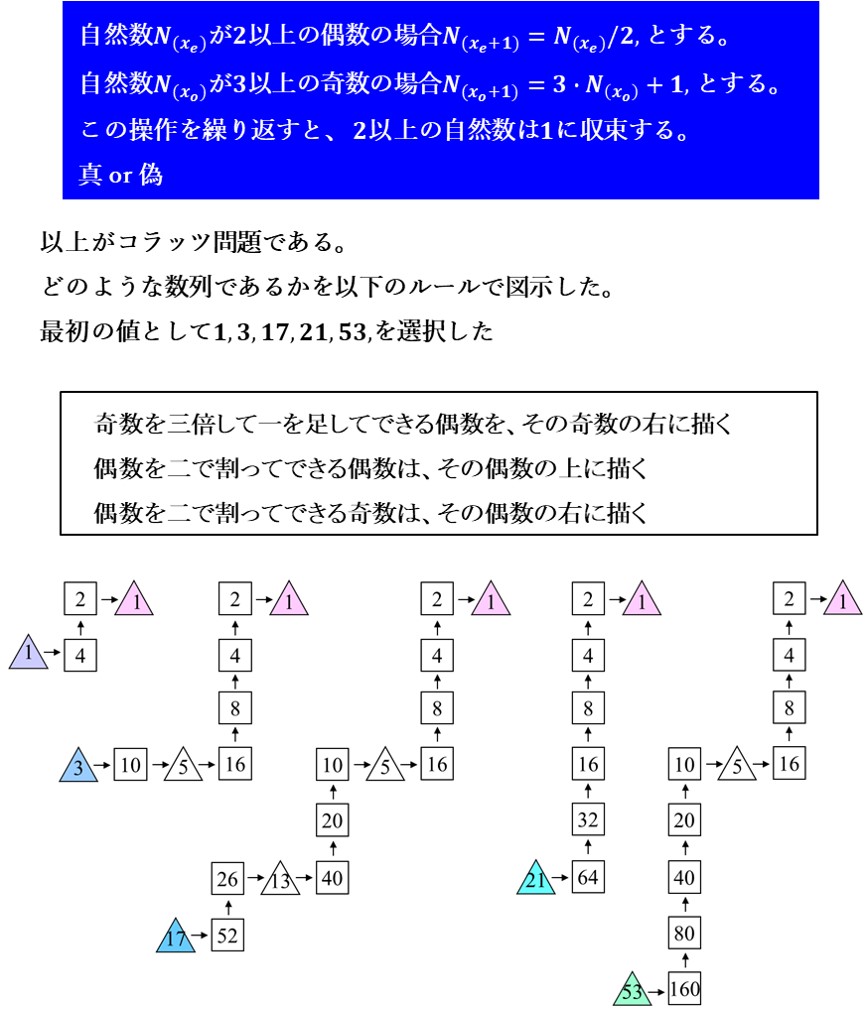



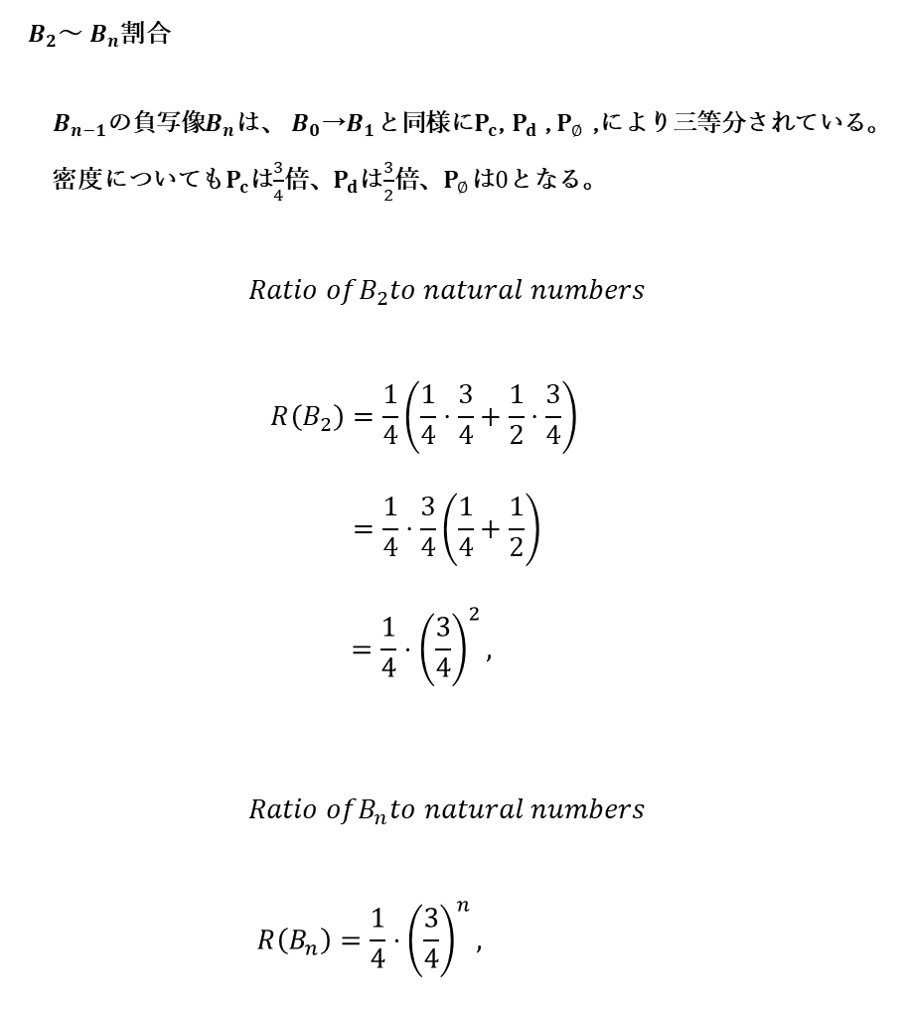
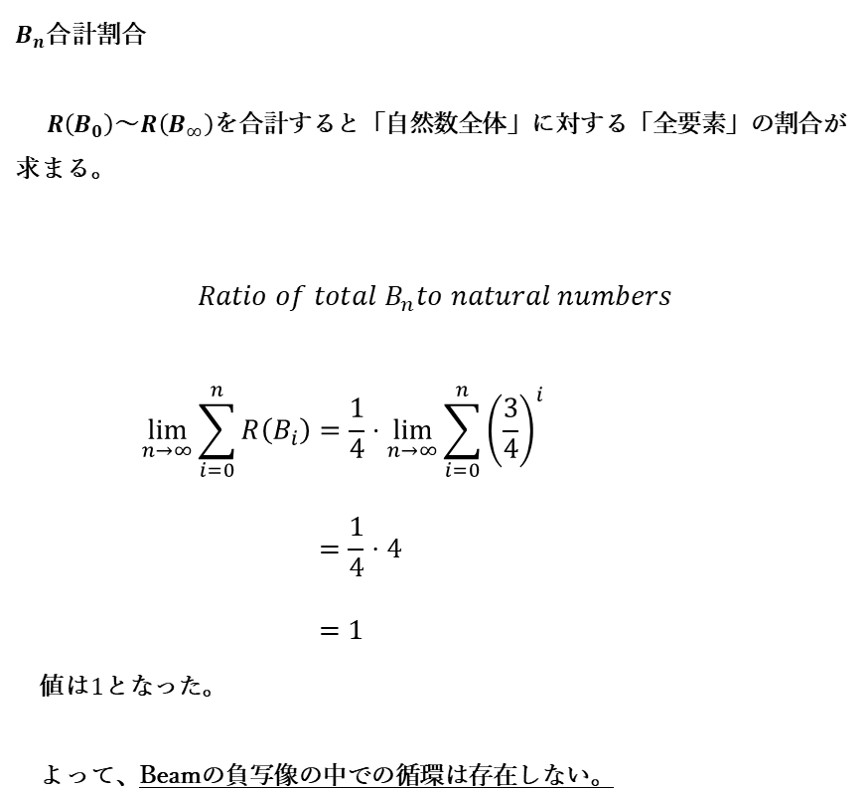

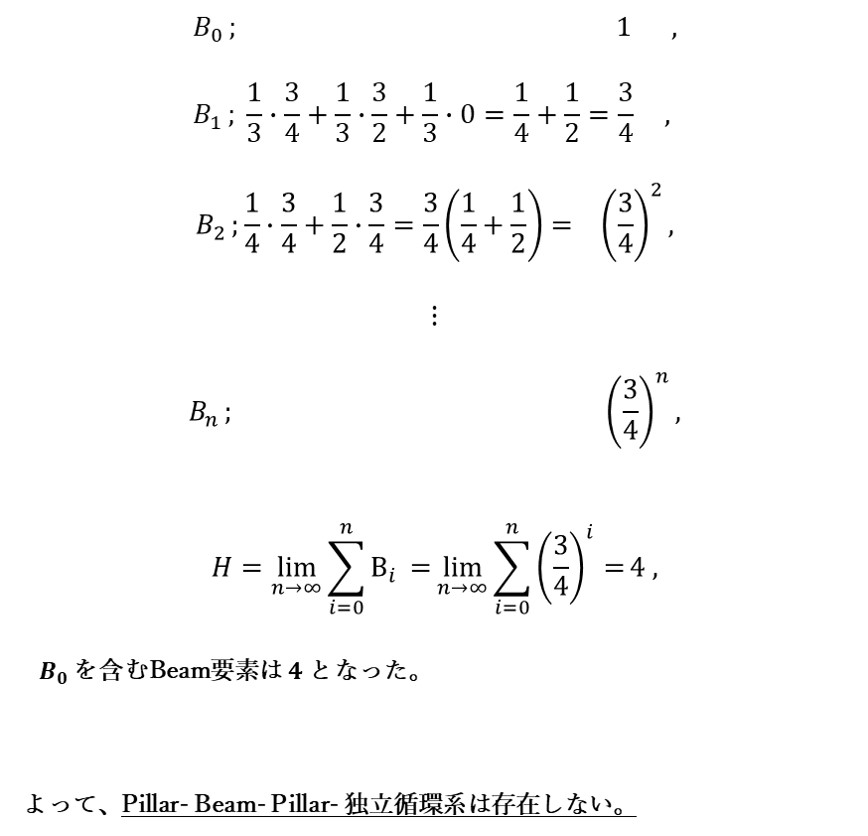

コラッツ問題20230507
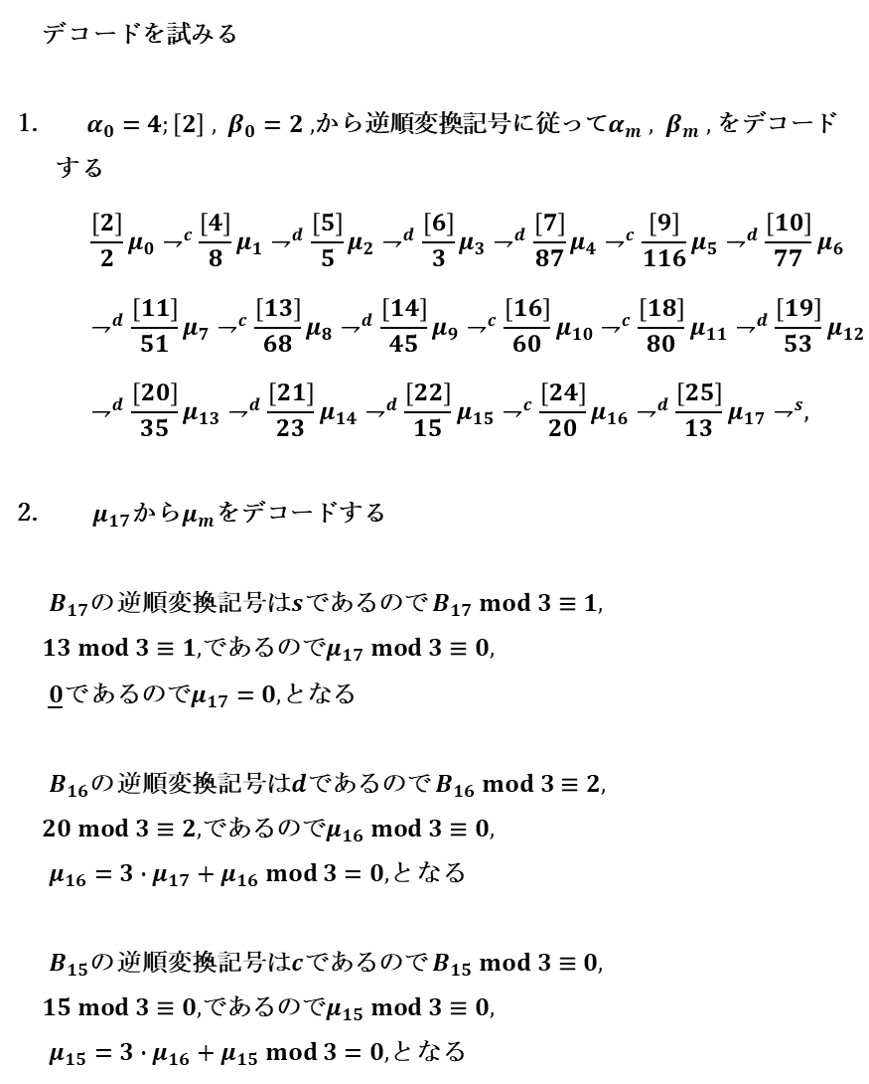
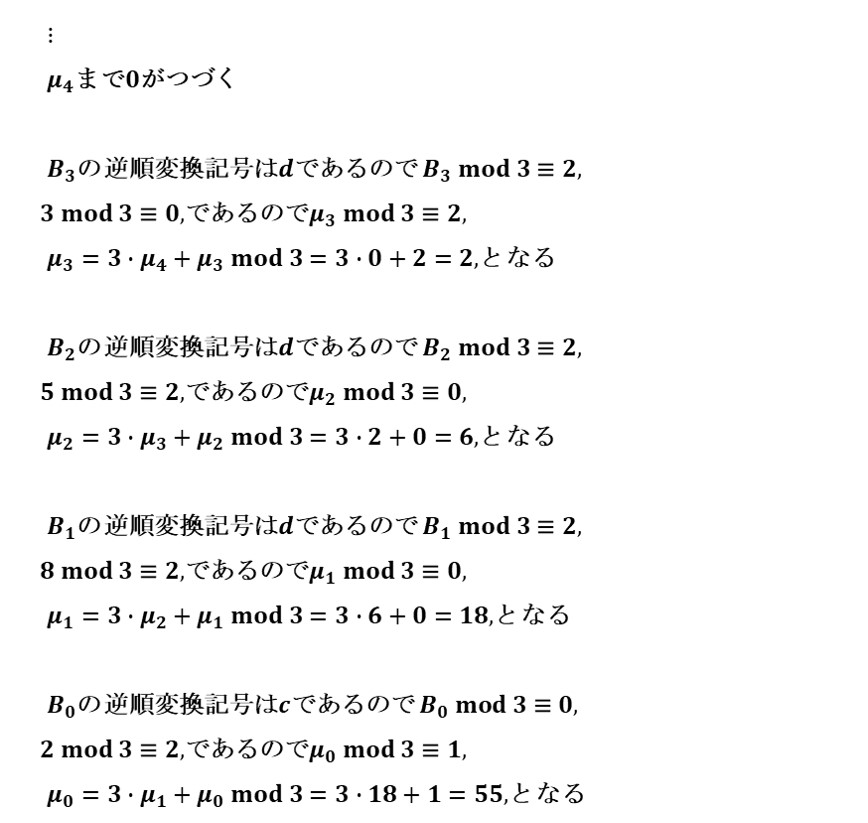
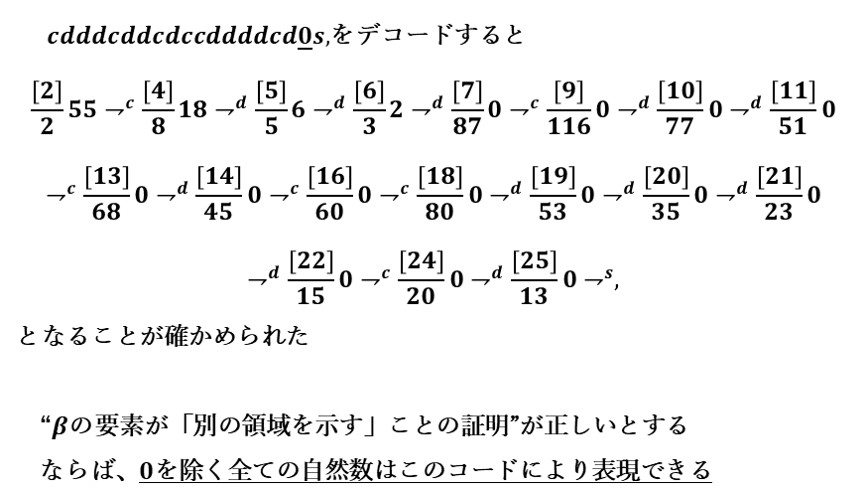
ビームの変換数列をコード化した
コードを解読し元の数列を復元した
このコード化で0を除く全ての自然数は表現できる
Decoding 1
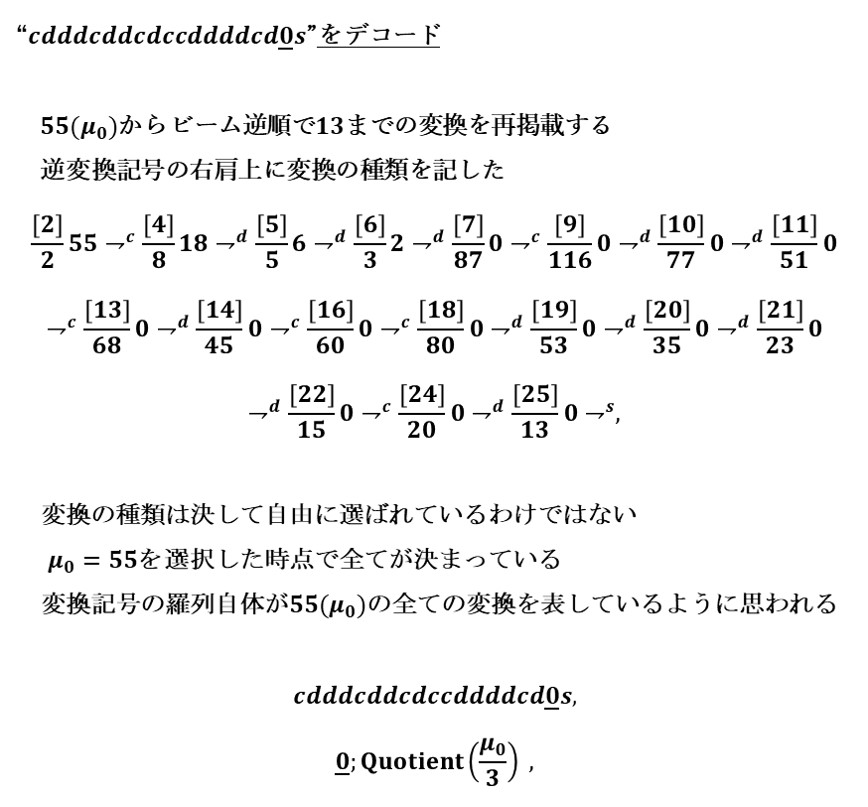
Decoding 2
Decoding 3
Decoding 4
以上
コラッツ問題20230505
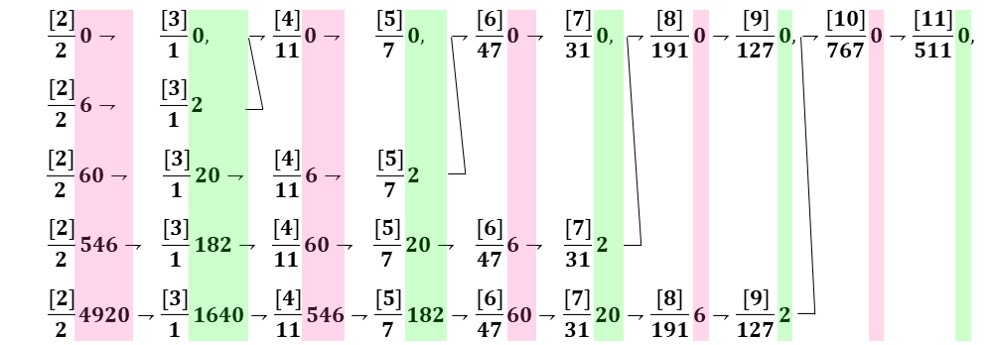
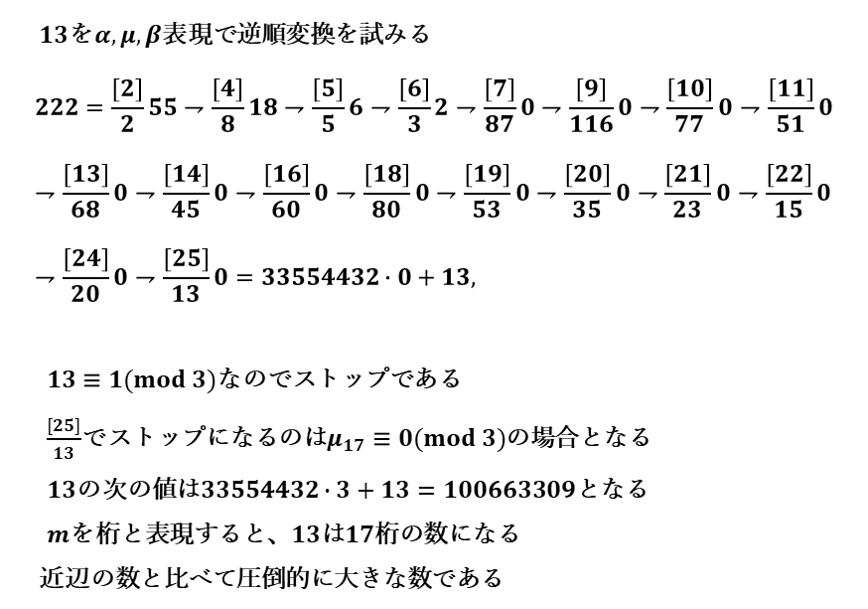
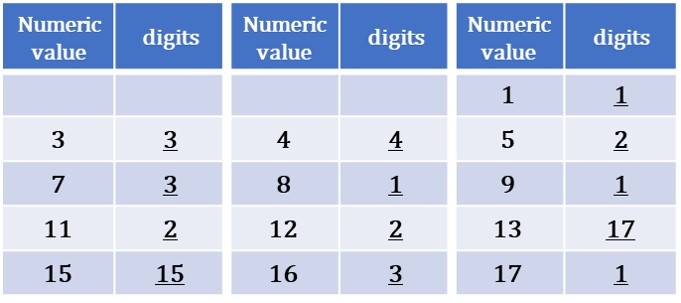
13(2*13+1=27)はピラーまでの正順変換回数が多い数である。
近辺の数が数回でピラーに達するのにである。
αμ+β表現を用いて探査してみた。
Why 13 is long 01

Why 13 is long 02

Why 13 is long 03
Why 13 is long 04

Why 13 is long 05
Why 13 is long 06
以上
